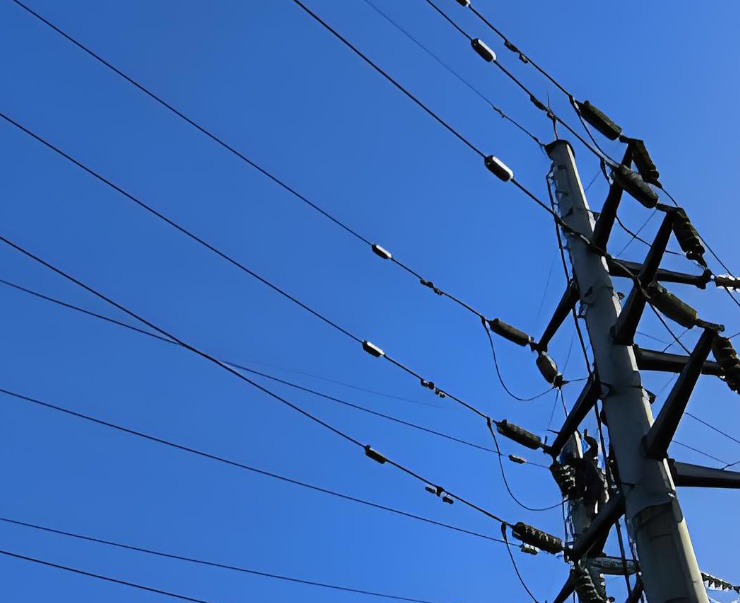
According to the first substation equipment (including cables) bidding announcement for power transmission and transformation projects of the State Grid in February 2026, in the classification of intelligent sensing equipment, the purchase volume of "distributed traveling wave fault diagnosis devices" increased by 45% year-on-year. Among them, the technical clause clearly stipulating that "the traveling wave distance measurement accuracy of a single device ≤ ±100 meters" has attracted industry attention. This change directly points to the core pain point of transmission line operation and maintenance - how to achieve "second-second positioning" of fault points in complex terrain and extreme weather conditions.
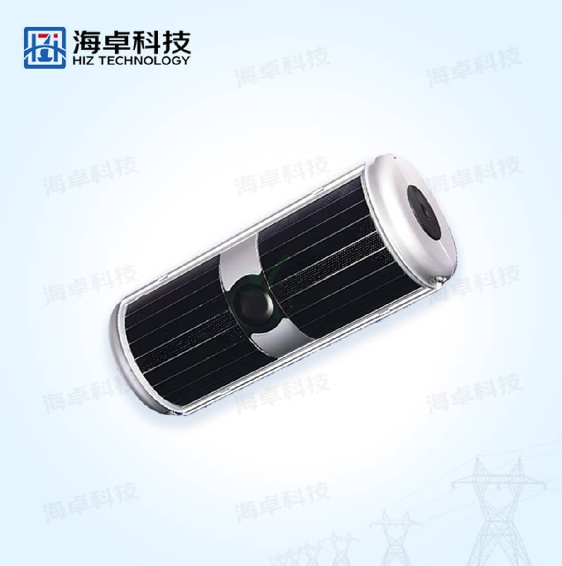
In this context, the HIZ-SD-GFB overhead line distributed fault diagnosis device launched by Guangxi Haozhu Technology, with its technical architecture of "high-precision wave measurement + multi-parameter fusion perception", has become the preferred solution for multiple ultra-high voltage supporting projects in East China.
Product Core: From "Passive Trip" to "Active Diagnosis"
The core breakthrough of the HIZ-SD-GFB device lies in the establishment of a "node - pipeline - cloud" collaborative diagnostic system:
1. Perception Layer: Dual-mode Waveform Capture Technology
The device is equipped with high-frequency traveling wave sensors and an industrial frequency quantity acquisition module, with a sampling rate of up to 10 MHz. It can simultaneously capture the traveling wave surge and steady-state electrical quantities at the moment of a fault. Compared to traditional single-ended distance measurement devices, it utilizes the synchronous timing signals at both ends of the line and key nodes along the line (with an accuracy of up to 10 ns level), and through the "time difference method", it can control the fault location error within ±50 meters, completely solving the problem of difficult line inspection in mountainous areas.
2. Computational Layer: AI Fault Nature Identification
Relying on the built-in edge computing chip, the device can identify the fault type locally. Through deep learning training of transient waveform features, it can accurately distinguish between lightning strike flashover (transient) and tree or bamboo discharge (permanent), with a false judgment rate of less than 0.5%. This function effectively avoids unnecessary reclosing failures and protects the switchgear.
3. Communication and Power Supply: Meeting the "Survival Requirements" in the Field
For remote lines without public network coverage, HIZ-SD-GFB adopts dual-channel redundant communication using LoRa and 4G/5G, ensuring zero data loss. In terms of power supply, the device innovatively adopts a "CT induction power collection + solar energy" hybrid power supply mode, which can still operate continuously and stably in extreme environments ranging from -40℃ to +85℃, and has a maintenance-free period of up to 5 years.