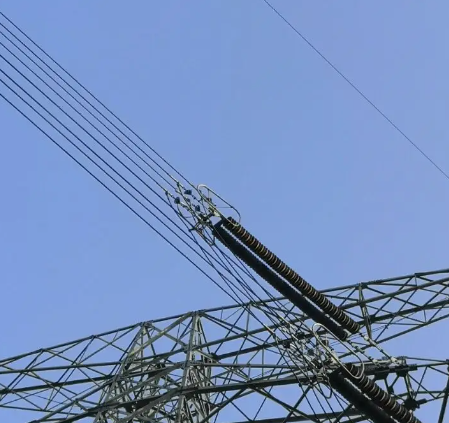
In high-altitude operation tasks in fields such as power, railways and municipal services, foreign objects like kite lines, plastic films and dead branches that float in the air are highly likely to cause equipment malfunctions. The traditional methods of clearing obstructions require climbing to heights or power outages, which not only have low efficiency but also pose extremely high safety risks.
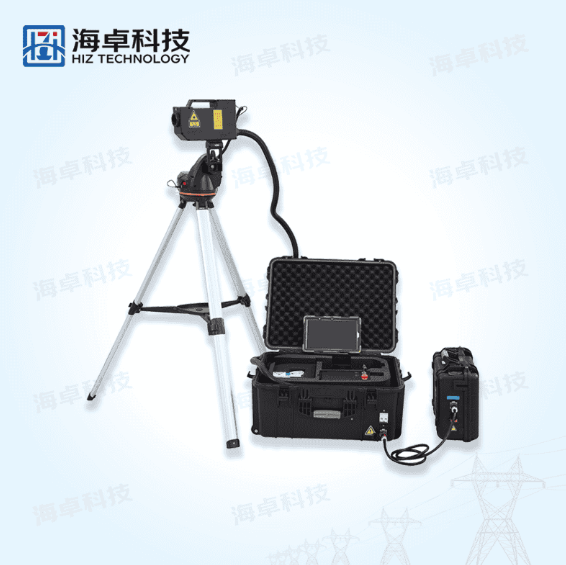
The HIZ-NT-QZY portable laser clearing device has emerged as a result of this need. Supported by international cutting-edge technology, it integrates portability, precision and efficiency, redefining the standards for high-altitude clearing operations and becoming a "valuable assistant" for maintenance personnel.
As an intelligent equipment specifically designed for remote debris removal, the core competitiveness of the HIZ-NT-QZY portable laser debris removal device lies in the international standard fiber QBH output head it is equipped with. QB, as the standard connector in the high-power laser field, has significant advantages such as low transmission loss, high power carrying capacity, and strong resistance to high reflection. It can efficiently and stably transmit laser energy to the target debris, avoiding the decline in debris removal efficiency caused by energy loss, and effectively resisting the damage to the core components of the equipment caused by reflected light, thereby significantly enhancing the stability and service life of the equipment.
Convenient control is another major highlight of HIZ-NT-QZY. The equipment uses a wireless controller to remotely control the laser, completely eliminating the constraints of wired connections. Maintenance personnel do not need to get close to live equipment or dangerous areas. They only need to be at a safe distance on the ground and use the wireless controller to flexibly adjust parameters such as laser power and light emission time, achieving precise start-stop and regulation of the laser. This wireless control design not only reduces the labor intensity of the operators but also fundamentally avoids safety risks such as falling from heights and electric shock, making the clearance operation safer and more flexible. It is particularly suitable for complex terrain operations in deep mountains, across rivers, and on steep slopes where it is difficult for people to reach.
Precise positioning is the prerequisite for efficient obstacle clearance. The HIZ-NT-QZY is equipped with a machine vision magnification system that can focus, providing a strong guarantee for remote precise obstacle clearance. This system can achieve multiple times optical zoom and precise focusing, and can clearly capture the fine details of high-altitude foreign objects within a 300-meter range. Even tiny kite strings and thin plastic films can be precisely targeted, avoiding the laser deviating and hitting the equipment body, causing damage. Combined with the flexible control of the intelligent pan-tilt, it can achieve precise adjustment of the laser spot, ensuring that the laser energy is precisely focused on the foreign object, achieving "point-to-point" efficient obstacle clearance. The clearance success rate can reach over 98%, effectively solving the problems of inaccurate positioning in traditional obstacle clearance and the tendency to damage equipment.
The 300-meter ultra-long clearance range enables the HIZ-NT-QZY to achieve a breakthrough in "long-distance, contactless" clearance, completely breaking the distance limitations of traditional clearance methods. Whether it is high-voltage power transmission lines, high-speed rail contact nets, or remote clearance of urban streetlights and park fences, the equipment can easily cover all areas, without the need for scaffolding construction or the use of large lifting equipment. A single person can quickly set up the operation, significantly improving the clearance efficiency. According to actual application data, this equipment can increase the clearance efficiency by 5 to 20 times. Ordinary foreign objects can be cleared within 30 seconds to 5 minutes, effectively reducing power outage losses and ensuring stable power supply for daily life and industrial production.