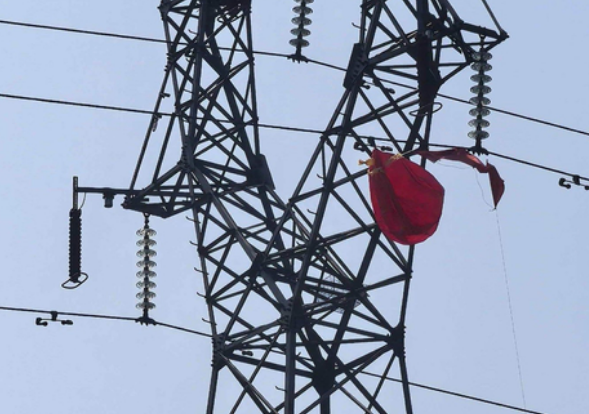
Kites, agricultural films, and colored ribbons—these seemingly insignificant "trinkets" are actually the most dangerous "assassins" to power grids. Once caught on power lines, they can trigger minor circuit trips or even widespread blackouts. What makes them particularly troublesome is their tendency to hang in remote areas inaccessible by vehicles—such as wilderness zones, steep slopes, and farmland. In the past, maintenance personnel had to carry dozens of kilograms of equipment over mountains and hills, a time-consuming and labor-intensive task fraught with risks of falling from heights and electric shock.
Portability and rapid deployment have become key factors determining whether laser obstacle-clearing devices can be effectively implemented in real-world operations.
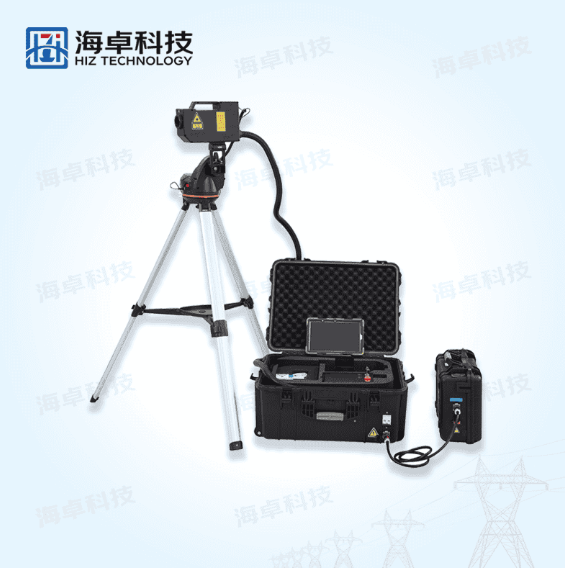
The HIZ-NT-QZY mobile laser obstacle-clearing system from HaiZhuo Technology features a lightweight modular design, weighing only 35 kg and measuring 660×500×320 mm—light enough for one person to easily lift and transport. Equipped with an integrated air-cooling structure that requires no external water cooling, it can be unpacked and ready to operate within minutes. Where previously two or three people had to shoulder hundreds of pounds of equipment up mountain trails, today's operation is as simple and convenient as routine patrols.
In emergency repairs for power and railway systems, time is everything. The HIZ-NT-QZY reduces setup time to just four minutes and locks onto targets within 30 seconds. In railway catenary applications, clearing foreign objects has been reduced from the traditional half-hour to just five minutes. Fast deployment, fast targeting, and fast removal make the "golden window" for emergency response no longer a luxury.
Traditional insulated bucket trucks require flat ground, while drones struggle with strong winds and air currents. The HIZ-NT-QZY adapts to complex terrains such as mountainous regions, steep slopes, and dense forests. Its integrated air-cooling design enables operation in extreme temperatures and harsh environments, requiring minimal maintenance. Operators control the device remotely via a wireless controller from a safe ground position, completely eliminating risks associated with working at heights and electric shock.