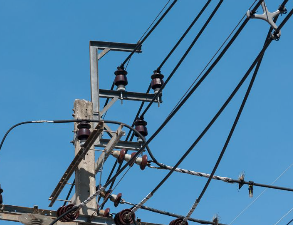
In the power system, equipment such as switch cabinets, cables, disconnectors, joints, and transformers operate under high loads for long periods, inevitably leading to problems such as poor contact, aging, overload, and rust. These issues can cause abnormal temperature rises in certain parts of the equipment. What may seem like a minor temperature change actually harbors significant risks. Once the temperature exceeds the limit, the consequences could be disastrous.
Abnormal temperature increases can directly accelerate insulation aging and breakdown, causing short circuits and tripping; in severe cases, it can lead to equipment burnout, requiring high replacement and maintenance costs, and may even trigger fires, explosions, and other safety incidents, or cause large-scale power outages, seriously affecting industrial production and residents' daily lives. According to statistics, many accidents in the power system are closely related to overheating of equipment. Therefore, effective temperature monitoring of power equipment is crucial for ensuring the safety of the power grid.
Establishing a power temperature monitoring system in the power system aims to detect temperature hazards in equipment in advance, prevent overheating and burnout, avoid power outages and safety incidents, and significantly improve operation and maintenance efficiency, contributing to the construction of a smart grid. The HIZ-SD-CW intelligent power temperature monitoring system is like a "smart guardian" for the power grid, precisely solving the problem of equipment temperature measurement and ensuring the safe and stable operation of the power system.
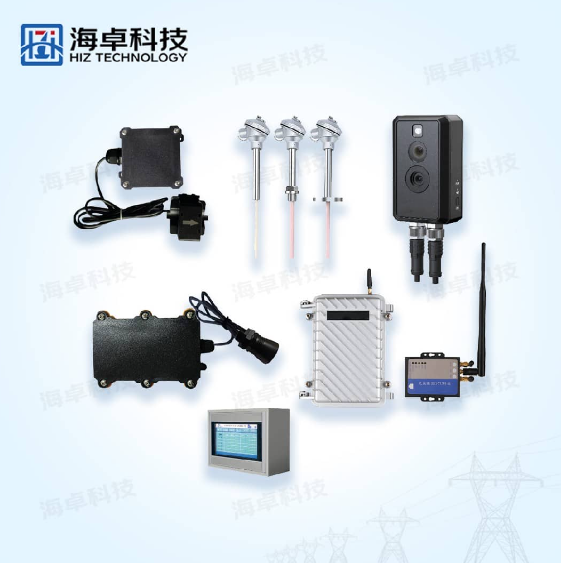
The HIZ-SD-CW intelligent power temperature monitoring system has outstanding advantages and is suitable for various power scenarios: it does not require drilling or wiring in switch cabinets, with a small amount of engineering work, greatly saving renovation time and costs. The on-site sensors and wireless transmission devices form a collection network, which can transmit temperature data in real time to the nearest display device. One wireless temperature measurement host can connect up to 120 wireless temperature sensors, providing clear and intuitive displays. Additionally, when paired with an IoT module, it can achieve cloud data management. Connecting to the host software enables remote data management, analysis, high-temperature alarms, data storage, and other functions. It supports multiple communication methods such as RS-485, fiber optics, and Ethernet to connect with the main station, fully meeting the monitoring needs of the smart grid and building a solid defense line for power grid safety.