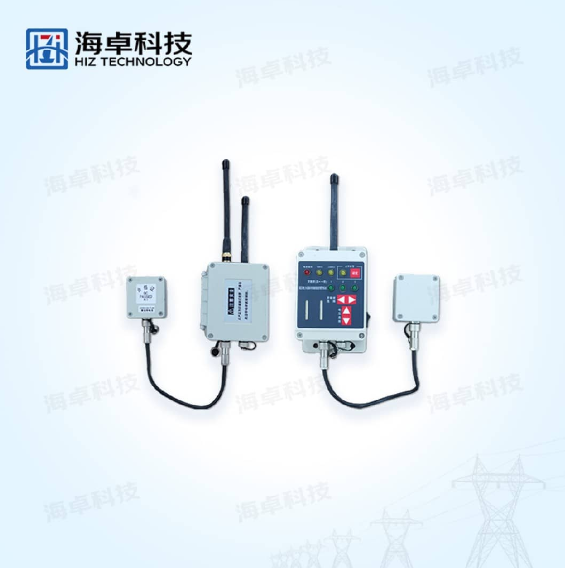
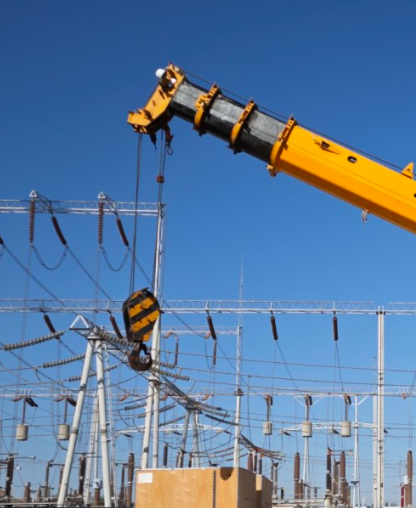
Nearby live equipment during hoisting operations has always been a major challenge for maintenance personnel. Under traditional methods, the operation risk is high and control is difficult. However, by using near-electricity alarm devices, the distance between the crane and the live body can be monitored in real time and warnings can be issued. These devices can flexibly adjust the alarm threshold according to different working environments and voltage levels, and have the characteristics of high sensitivity, anti-static, and anti-interference. They can operate stably in complex and changeable working conditions, minimizing the risk of electric shock through technical means.
Take the HIZ-SD-JD crane boom anti-touch alarm device from Guangxi Haizhuo Technology as an example. This device is specially designed for cranes and other large machinery, using mature electromagnetic induction technology to build a reliable "electronic fence" for operators. The alarm device consists of two parts: the monitoring end and the receiving end. The monitoring end is installed on the boom, and the receiving end is placed in the cab, forming an efficient and sensitive safety monitoring system. Once the mechanical arm approaches the safety warning area of the high-voltage line, the receiving end will immediately trigger an alarm, reminding the driver to adjust the operation position and avoid the risk of electric shock.
In actual operations, the advantages of near-electricity alarm devices are particularly prominent. Previously, drivers had to be constantly vigilant about the surrounding environment during hoisting, especially in poor visibility or when high-voltage lines were hidden, which posed a significant safety hazard. With the installation of intelligent warning devices, operators can focus more on the operation itself, as the equipment will promptly issue a warning when approaching a dangerous area, providing a reliable guarantee for safe construction.